Exam-prep flashcards
How to study for exams with flashcards without memorizing the wrong things
Start from the assessed objectives, make prompts that resemble the knowledge the exam requires, review across several days, and use full practice questions for skills that do not fit on a card.
Reviewed July 21, 2026
The short answer
Map the syllabus, create cards for facts and explanations you must retrieve, begin before the final week, and review due material consistently. Use flashcards to secure the components of an answer, then practise calculations, essays, and timed questions in their full exam format.
Build an exam deck from the assessment backward
- 1
Map the specification
List the units, learning objectives, command words, and high-value topics the exam can assess.
- 2
Create exam-shaped prompts
Ask for definitions, comparisons, steps, evidence, formulas, or examples in the form you will need to produce them.
- 3
Review and test transfer
Use spaced card practice for core knowledge and past questions to confirm you can apply it under exam conditions.
Let the syllabus control the deck
Lecture notes and textbooks often contain more detail than the assessment requires. Start with the official specification, course objectives, or teacher checklist, then use notes to answer those targets. This prevents a large deck from hiding important gaps.
Tag or group cards by unit so you can see coverage. If one chapter has many easy cards and another has only two vague prompts, the deck is not balanced even when its total count looks impressive.
Use the exam’s command words
Define, identify, compare, explain, calculate, and evaluate are different retrieval tasks. A term-and-definition deck may not prepare you to compare two processes or select evidence for a claim. Write prompts that force the relevant action.
For an essay, cards can test thesis options, evidence, counterarguments, and key definitions. They cannot replace outlining and writing a timed response. For mathematics and science, cards can test formulas and conditions, while complete problems test selection and execution.
- Separate facts you must recall from skills you must perform.
- Use reverse prompts when the exam may present the clue instead of the term.
- Add common errors as prompts when they reveal an important distinction.
Plan for review growth before the final week
New cards create future reviews. Adding hundreds of cards just before an exam leaves little time for spacing and makes it difficult to distinguish weak knowledge from a large unfinished queue.
Begin with the highest-priority topics, add new material in manageable groups, and check progress with mixed quizzes or past questions. As the exam approaches, reduce creation and spend more time retrieving and applying.
Exam-prep flashcards
Build an exam plan in Memko
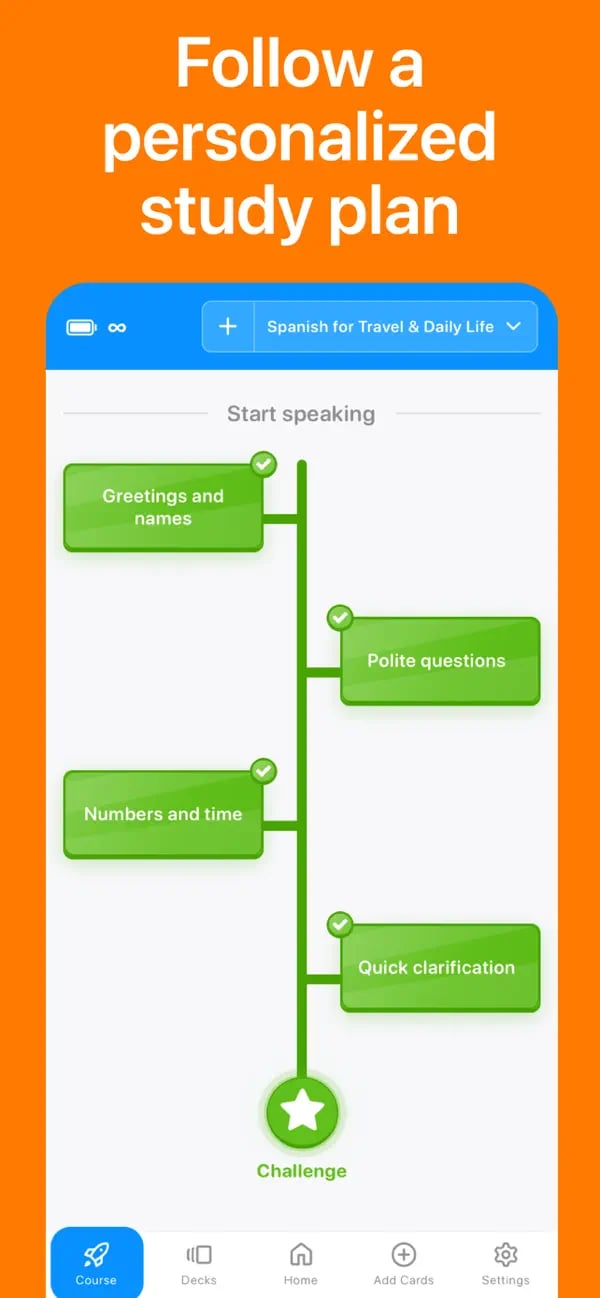
Use a personalized course for a multi-unit path or standalone decks for the subjects already in your revision plan.
- 1
Create a course around the exam and focus, or scan a page of your revision notes into a deck.
- 2
Edit the cards against the syllabus and use Flashcards, Quiz, Match, and Reverse practice to expose different gaps.
- 3
Complete due reviews, watch the daily workload, and use external past papers for full exam-format practice.
Exam-flashcard questions
Keep the deck connected to the assessment.
Keep learning
Sources and further reading
Turn today’s notes into tomorrow’s knowledge
Create a deck, follow a personalized plan, and keep important ideas moving through short daily practice.
Free to download on iOS and Android