Daily flashcard goals
How many flashcards a day? Start with the workload you can repeat
There is no universal perfect number. The useful goal is the number of new cards you can add while still completing due reviews and doing the other practice your subject requires.
Reviewed July 21, 2026
The short answer
Begin with a small new-card goal and measure the total session after due reviews are included. If you finish consistently and still have time for deeper practice, increase gradually. If reviews accumulate or answers become careless, reduce new cards until the routine is stable.
Find your sustainable number
- 1
Measure available time
Choose the realistic time you can repeat on an ordinary day, not the longest session you can complete once.
- 2
Count reviews first
Due cards are part of the workload. Add new material only after leaving enough room to retrieve older knowledge.
- 3
Adjust from real sessions
Increase slowly when completion is comfortable and reduce the goal when reviews, errors, or rushed ratings begin to grow.
New cards are a recurring commitment
A new card usually returns several times before it becomes stable. Studying 50 new cards today does not create only 50 actions; it creates a set of future reviews that overlap with tomorrow’s new cards and older material.
That is why a smaller consistent goal can cover more material over a month than an ambitious number followed by missed days. Review capacity, not only creation speed, is the limiting factor.
Difficulty and card quality change the number
Ten short vocabulary cards and ten complex explanation cards do not require the same effort. New subjects, unfamiliar notation, and poorly written prompts slow the session. Estimate workload by time and attention as well as card count.
If one card repeatedly consumes too much time, check whether it tests several ideas or needs missing context. Editing one bad card can improve the daily routine more than increasing the target.
- Use fewer new cards during exam weeks with a heavy due queue.
- Separate card review from longer problems, essays, or conversation practice.
- Protect accurate ratings; rushed completion creates weak scheduling feedback.
Change the goal when your circumstances change
A daily goal is a planning tool, not a moral score. Lower it during busy weeks, travel, illness, or a large review backlog. Raise it gradually when the existing queue is under control and the subject still needs more coverage.
Track consistency and mastery alongside streaks or XP. Finishing the planned work is useful, but the purpose is to retrieve knowledge accurately and keep the workload compatible with your larger learning goal.
Daily flashcard goals
Tune your daily goal in Memko
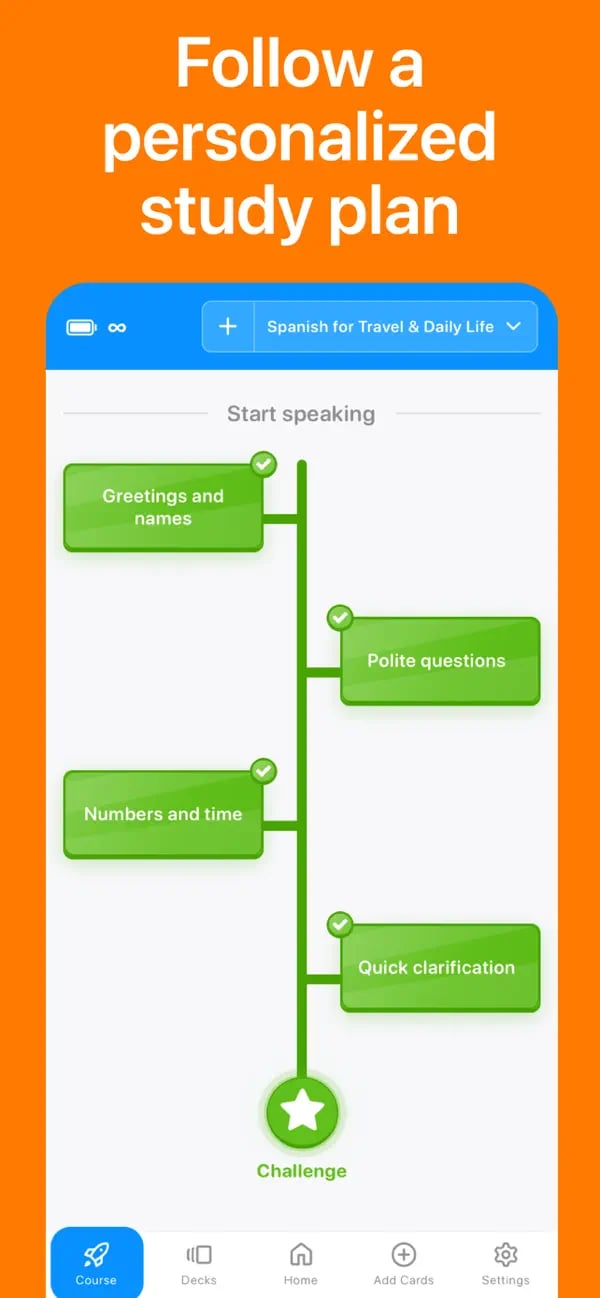
Memko shows new cards, due reviews, course work, and progress so you can adjust the routine from actual demand.
- 1
Start with a conservative new-card goal and complete the due cards that appear in the daily plan.
- 2
Watch how session time and the review queue change across several days rather than judging one session.
- 3
Open learning settings and lower or raise the daily goal when the workload no longer matches your time.
Daily-goal questions
Use workload, not an arbitrary benchmark.
Keep learning
Sources and further reading
Turn today’s notes into tomorrow’s knowledge
Create a deck, follow a personalized plan, and keep important ideas moving through short daily practice.
Free to download on iOS and Android